-1.jpg?width=412&height=244&name=Imagery%20template%20(2)-1.jpg)
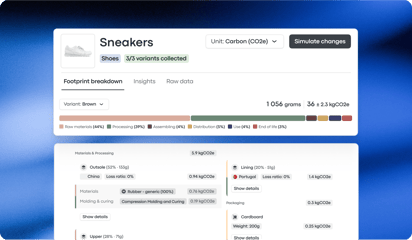


Environmental intelligence platform - built for apparel and footwear brands, and their suppliers.


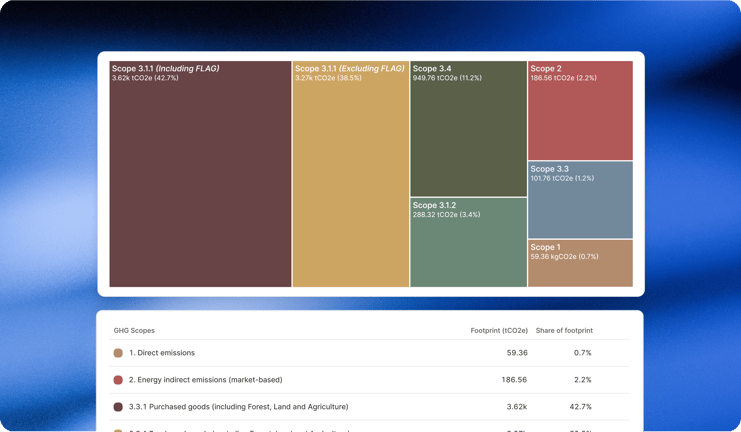
For apparel and footwear brands, the carbon accounting challenge is particularly complex. Supply chains span multiple continents, involve diverse materials, and rely on hundreds of suppliers. Frameworks such as the GHG Protocol, CSRD, and voluntary reporting standards now require companies to quantify emissions across their entire value chain.
As sustainability teams begin measuring emissions for the first time - or move beyond consultant-led reports - one question quickly emerges:
What is the best carbon accounting software for fashion brands?
The answer depends largely on the approach used to calculate emissions. In practice, most brands rely on one of three approaches: consultants, generalist carbon accounting platforms, or fashion-specific platforms.
This article compares these three approaches to help brands understand which option best fits their reporting needs, internal capacity, and long-term sustainability strategy.
Carbon accounting helps fashion brands measure greenhouse gas emissions across Scopes 1, 2, and 3 of the GHG Protocol, with the majority of emissions typically falling under Scope 3 – particularly purchased goods and services.
Brands generally rely on one of three approaches: consultants, generalist carbon accounting platforms, or fashion-specific platforms.
Consultants are often used for a first carbon footprint assessment but can be slow and expensive to repeat each year. Generalist platforms provide digital reporting tools that work across industries but often rely on high-level or spend-based data that limits precision for fashion supply chains. Fashion-specific platforms are designed for the complexity of apparel production and typically use activity-based data and industry-specific emission factors.
As regulatory expectations increase and Scope 3 reporting becomes more important, the quality and traceability of the underlying data is becoming the key factor that determines whether carbon accounting is merely a reporting exercise or a tool that can support real decarbonization decisions.
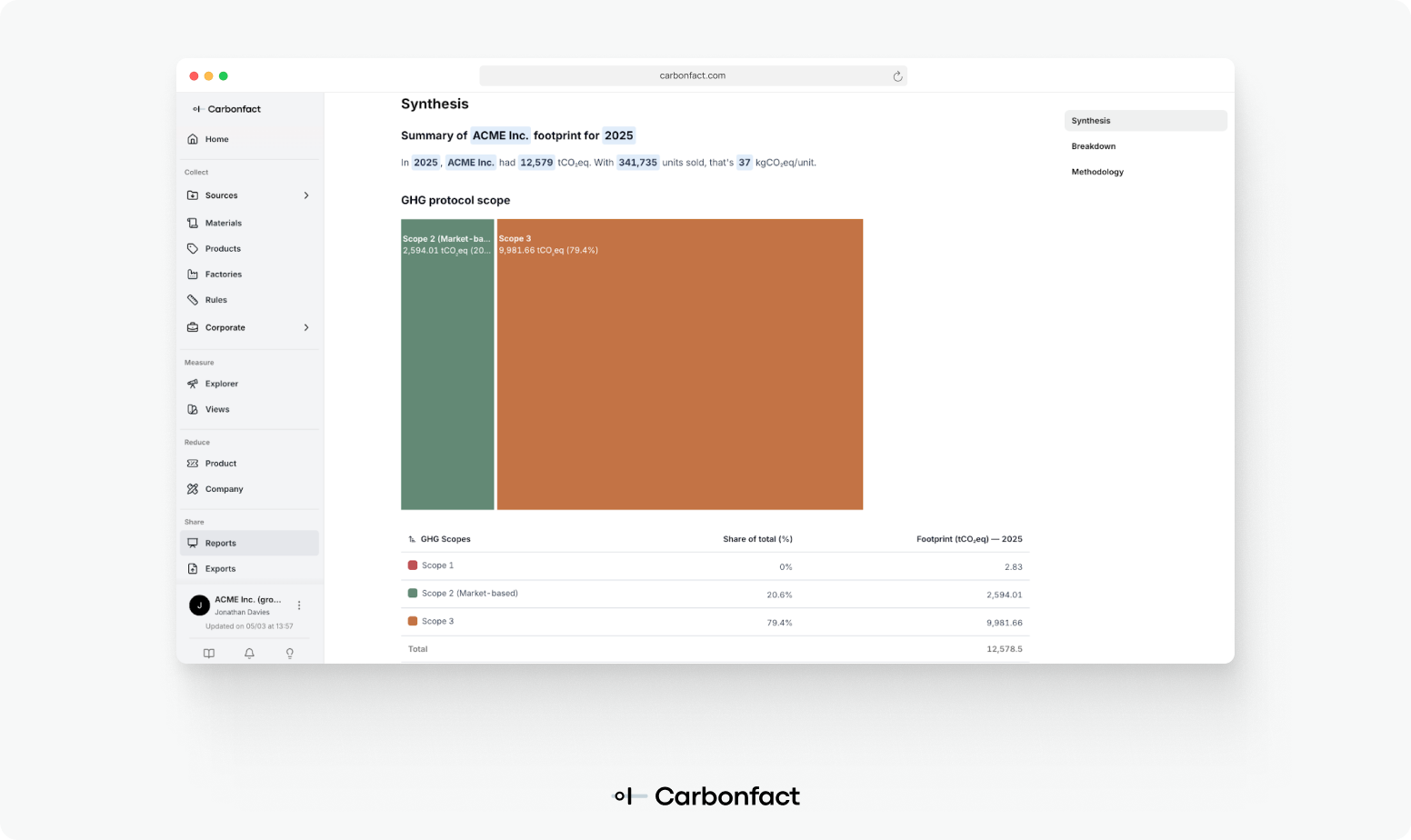
Carbon accounting measures greenhouse gas emissions across three scopes defined by the GHG Protocol:
Scope 1 – Direct emissions from owned facilities or vehicles.
Scope 2 – Indirect emissions from purchased electricity or heating.
Scope 3 – Indirect emissions across the value chain, including materials, logistics, product use, and end-of-life.
For fashion brands, Scope 3 dominates emissions, often representing around 90% of total impact because most production happens within the supply chain rather than owned operations.
This means accurate carbon accounting requires data about:
Materials used in products
Manufacturing processes
Supplier locations
Logistics and transportation
Energy consumption across operations
Capturing this data consistently across hundreds or thousands of products is one of the core challenges facing sustainability teams today.
Most fashion brands currently measure emissions using one of three approaches.
Primary focus: Accurate, activity-based emissions measurement tailored to apparel supply chains
Fashion-specific carbon accounting platforms are designed to address the complexity of the apparel industry. They combine automation, industry-specific emission factors, and structured product or supply chain data to generate carbon inventories aligned with the GHG Protocol.
Rather than relying on financial proxies, these systems typically calculate emissions using activity-based data such as material quantities, energy consumption, and transport distances.
These platforms allow sustainability teams to update carbon inventories regularly and reuse data across reporting frameworks such as CSRD, CDP, and GRI.
Example: Carbonfact
Primary focus: Cross-industry ESG and carbon reporting
Generalist carbon accounting platforms provide digital tools to track sustainability metrics across industries. These platforms typically integrate with accounting systems and enterprise software to collect data and generate company-level emissions reports.
Because they are designed for multiple sectors, they often rely on spend-based emissions calculations, estimating emissions based on financial expenditures and generic emission factors.
Generalist platforms are useful for companies seeking corporate-level sustainability reporting, but they often lack the depth needed for fashion-specific decarbonization strategies.
Examples: Watershed
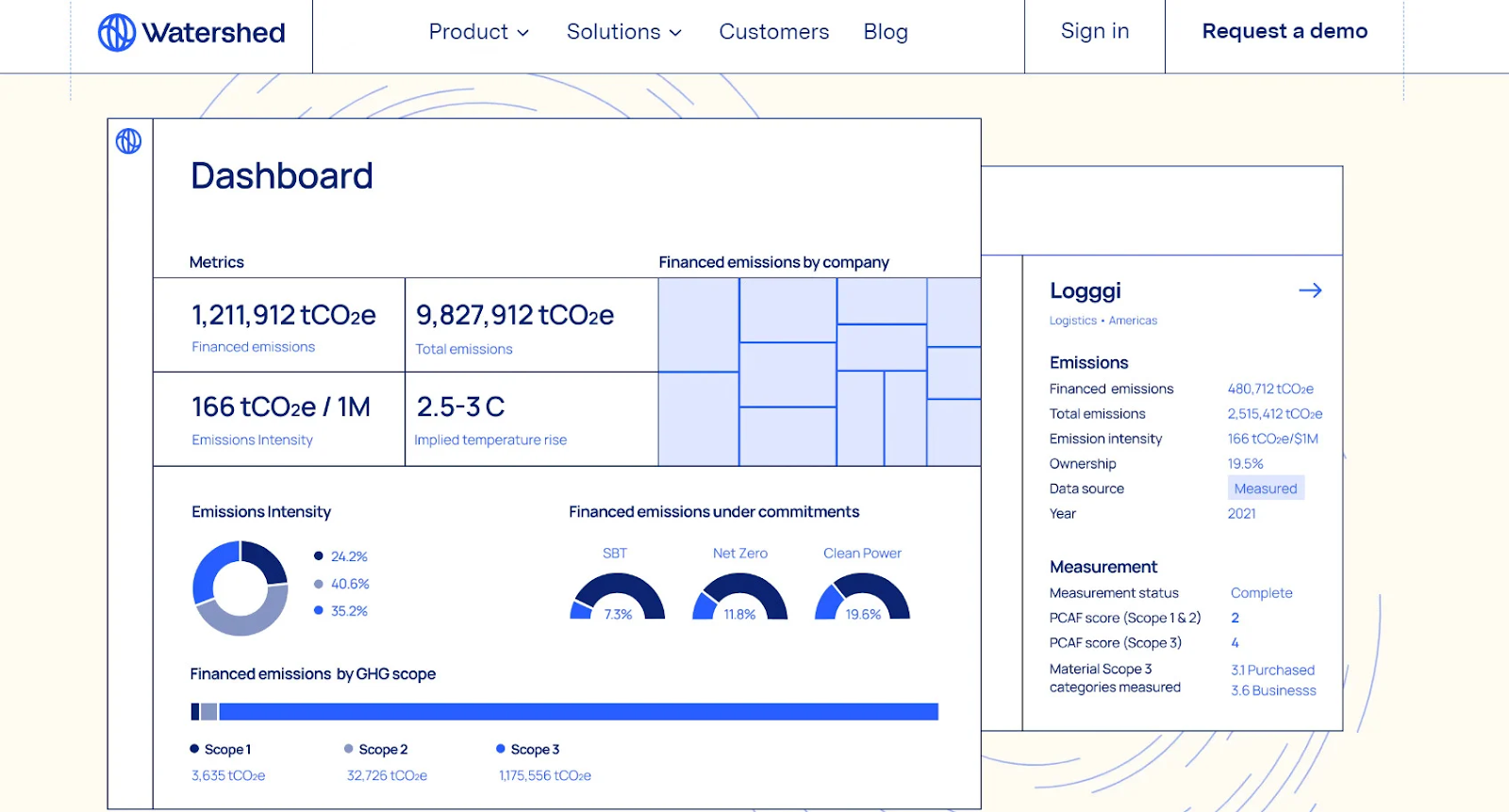
Source: Startupstash.com Watershed profile page
Primary focus: Manual carbon footprint assessments
Consultants provide project-based carbon accounting services. They gather company data, apply emission factors, and deliver a report summarizing the organization’s carbon footprint and reduction opportunities.
These projects often rely on spend-based data due to limited access to operational information. While consultants provide valuable expertise, the resulting reports are usually static documents that require repeating the process each reporting cycle.
Consultant-led assessments are often a starting point, but many brands eventually transition to software platforms to manage carbon accounting internally.
Examples: Quantis, ClimatePartner
There is no universal solution for every brand.
Different approaches serve different stages of sustainability maturity:
Consultants are often used for the first carbon footprint assessment
Generalist platforms help centralize ESG reporting across organizations
Fashion-specific platforms provide the accuracy and scalability needed for long-term carbon management
For brands with complex supply chains and large product catalogs, the ability to link emissions to materials, suppliers, and production processes becomes increasingly important.
The apparel industry is moving away from spend-based carbon accounting toward activity-based measurement, where emissions are calculated using physical data such as material quantities, fuel use, or transport distances.
This shift improves both accuracy and actionability.
Activity-based carbon accounting allows brands to:
Instead of rebuilding the carbon footprint each year, brands can build a structured data system that evolves alongside regulatory and business requirements.
When evaluating carbon accounting software, the most important question is not simply how quickly a footprint can be calculated, but:
How accurate, traceable, and reusable the underlying emissions data will be over time.
Consultants provide expertise and a useful starting point. Generalist platforms help digitize reporting workflows. But fashion-specific platforms are designed to reflect the operational reality of apparel supply chains.
As reporting expectations continue to grow, carbon accounting is shifting from a once-a-year report into a continuous system that supports measurement, reporting, and decarbonization decisions.


Environmental intelligence platform - built for apparel and footwear brands, and their suppliers.