
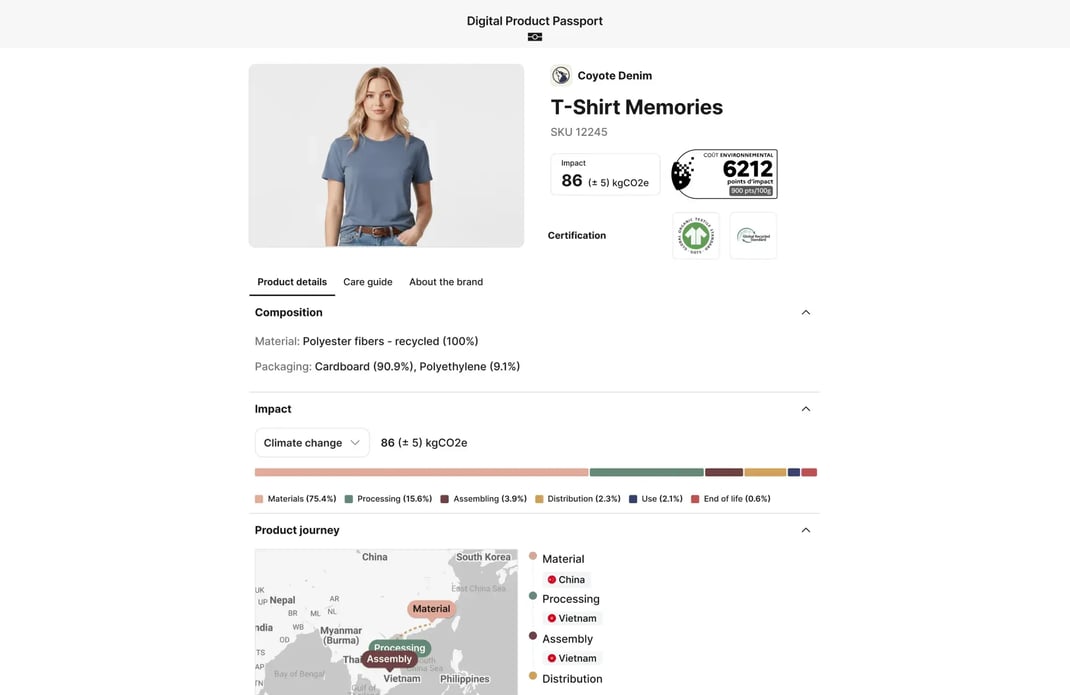
Product-level impact data
Carbonfact automates life cycle assessments across your entire catalogue to create LCA-based DPPs.
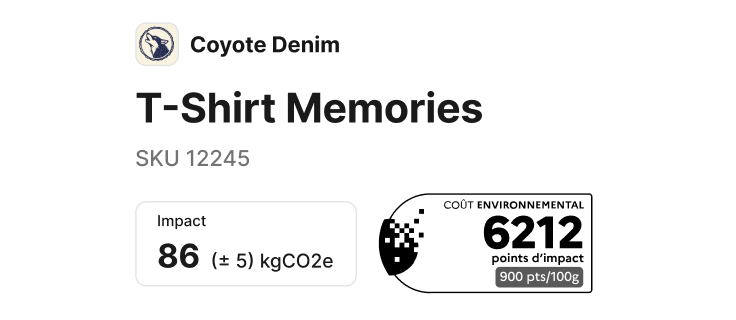
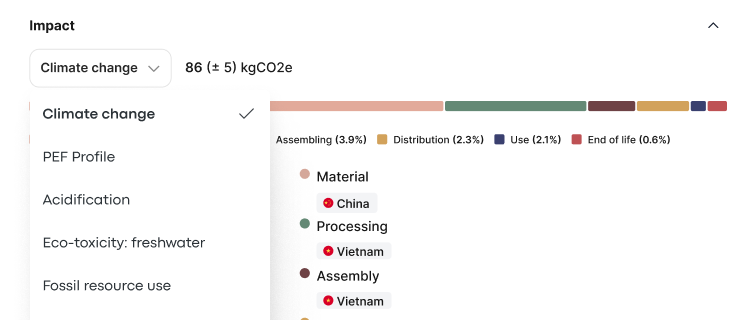
16 PEF indicators and Eco-Score
Show all 16 environmental indicators and optionally display the French Eco-Score in your DPP.
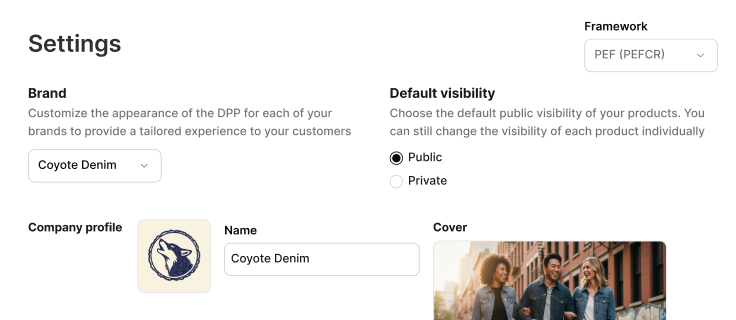
Brand-level customization
Customize the look and feel of your DPP to match each of your brands' identities.
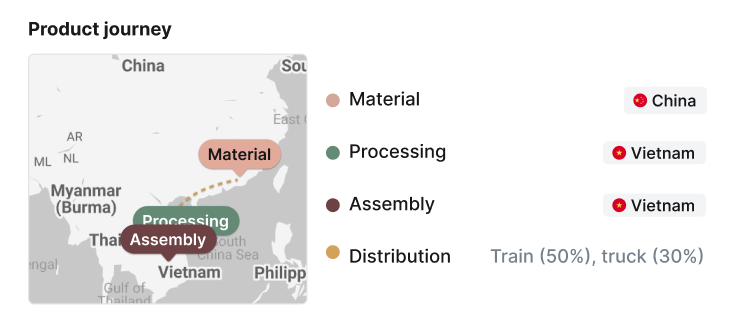
Factory-level product journey
Automatically maps the entire product journey across countries and the factories within, ensuring accurate emission traceability.
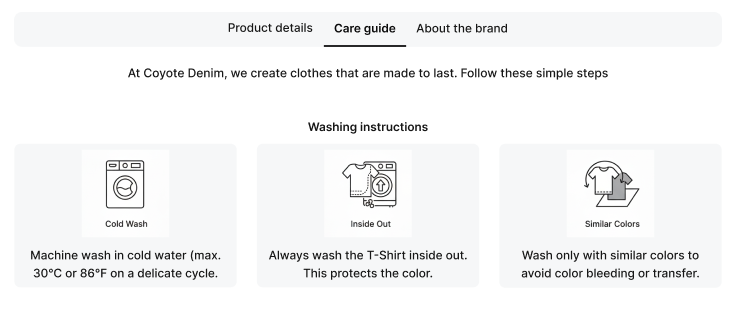
Care Guide
Upload a care guide to provide all the information your buyers need.
Providing DPP Data for 200+ brands


%201.svg)
.svg)







.svg)
DPPs, built on solid data
Create consumer-facing Digital Product Passports based on product LCAs
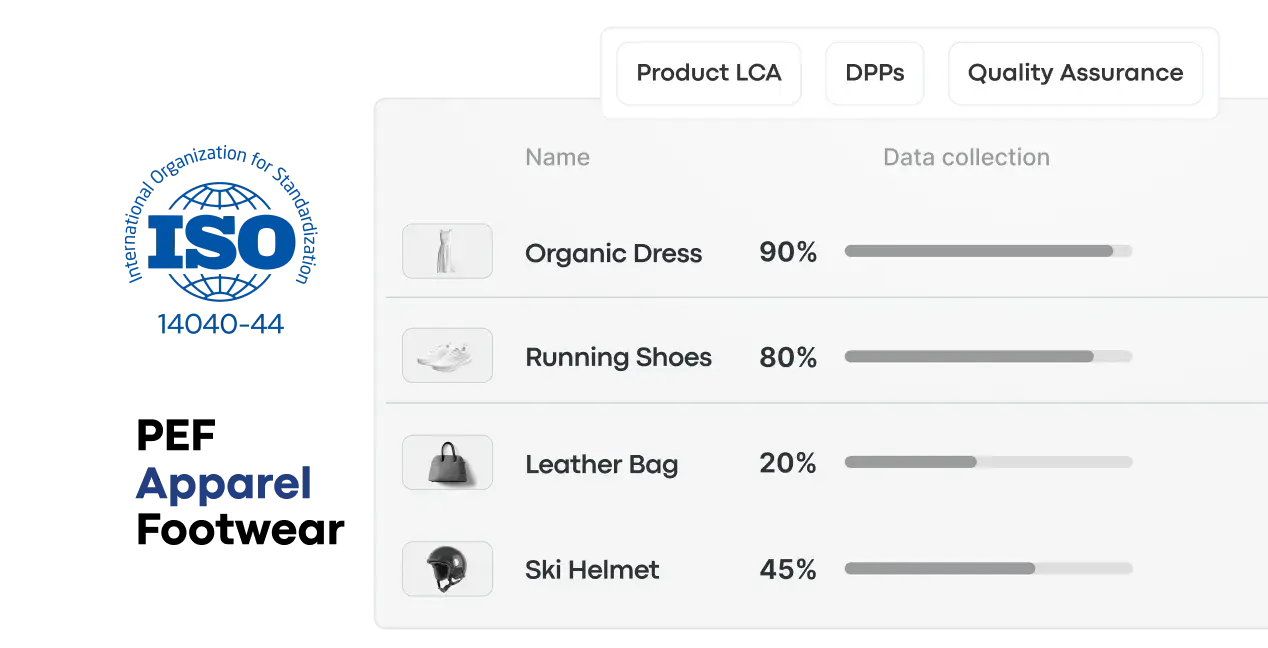
Build an audit-ready data foundation
We run product LCAs across your entire catalogue to build a science-based data foundation — so you can publish DPPs with confidence.
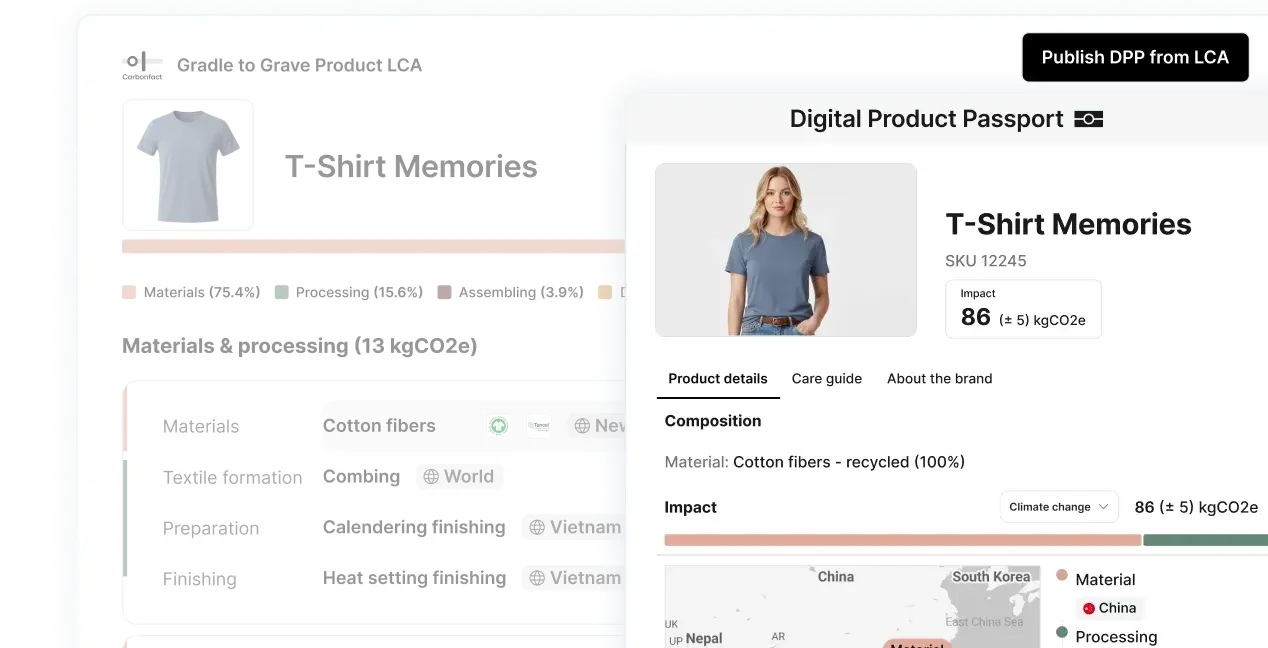
Publish consumer-facing DPPs from your LCAs
Automatically turn your Carbonfact LCA data into ready-to-publish, beautiful Digital Product Passports.
Go live fast with auto-generated pages and QR codes
Carbonfact automatically creates QR codes and links for thousands of products, ready to share with your label provider.
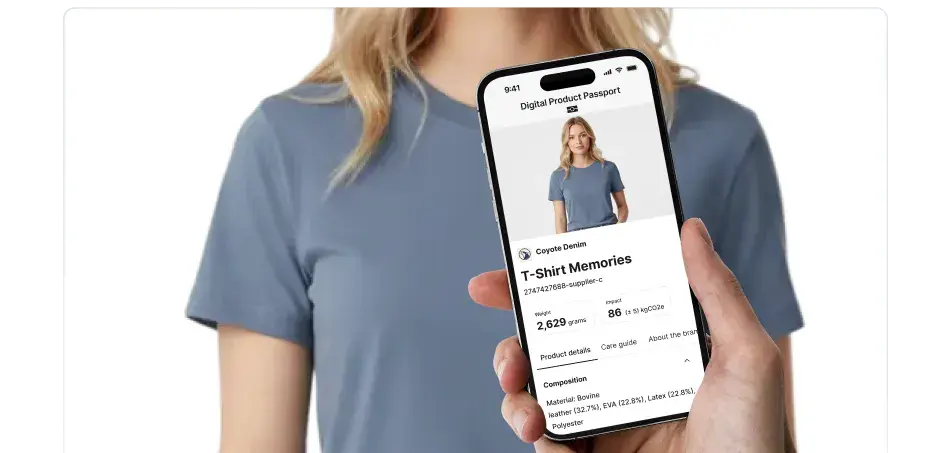
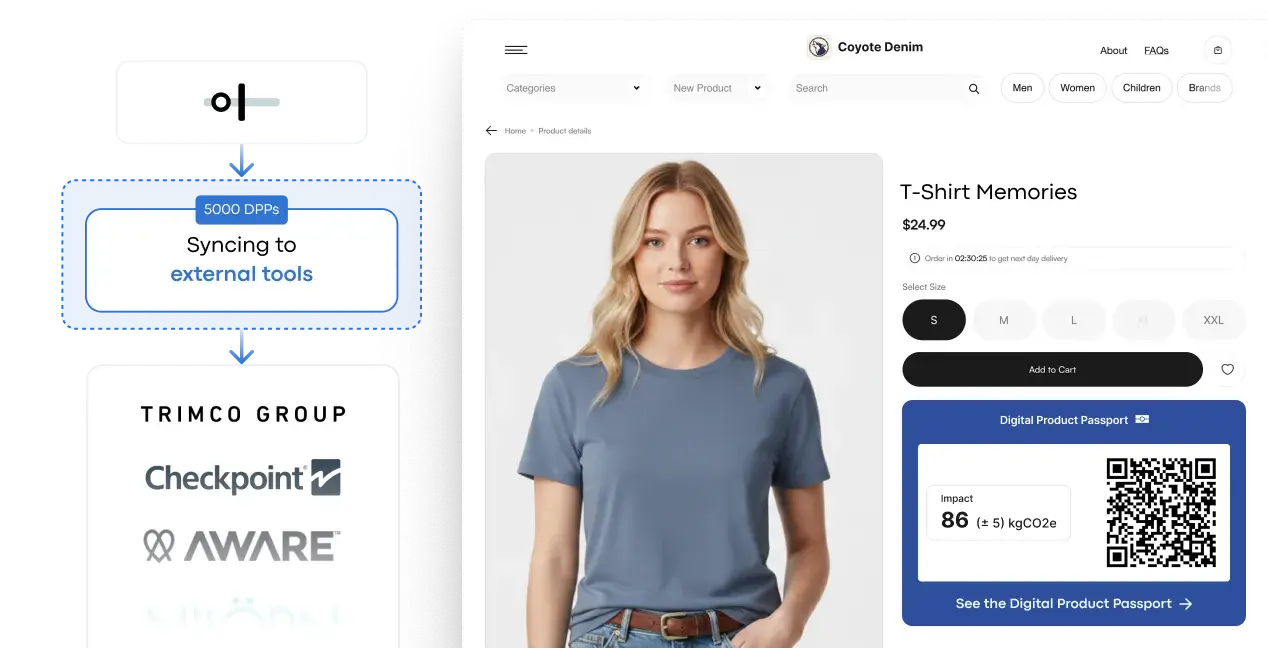
Deploy flexibly: host, embed, or export
Control where and how your DPP data is hosted – your website, our servers or an external tool integrated with Carbonfact’s LCA data.
What Our Customers Say

“Together with Carbonfact, we started the Digital Product Passport journey and co-developed ambitious features that enables Fusion to share product-level environmental information with our customers, which will also be a part of the upcoming European Union regulatory requirements. The best part is that Carbonfact is a great tool and we use it for carbon accounting, environmental reporting, and product LCAs. All in one place.”
Troels Vest Jensen
CCO at Fusion Sportswear System


“We chose Carbonfact for a couple of reasons. One is compliance. So, being able to manage our data efficiently to prepare for upcoming regulations like the Digital Product Passport. The other was automation. We wanted to be able to efficiently measure the product carbon footprint across our soft goods line, but we have a huge breadth of SKUs, so we simply didn't have the bandwidth within our to conduct LCA on each individual product manually."
Julia Kirschner
Impact & Innovation Director @ ARMEDANGELS


“From the start of our collaboration with Carbonfact, we started showing our clients what we were doing. For example, Crabonfact’s visualisation tool for DPP was really important in proving that we have a partner with a good data strategy, helping with our CSR strategy. It really helped us to secure our business and sell more products at the end. We are working with B2B clients, and I love the fact that we can export DPP links or even QR codes in Carbonfact.”
Juanita Toro Giraldo
R&D Projectmanager at Coverguard


“In terms of product data, we’re using SAP for the volumes and Fairly Made for the traceability of our products. Carbonfact directly retrieves that information from these platforms, applies the emission factors, and brings it all together into one clear view.”
Louise Vandon
CSR Officer at A.P.C.


"What's really special about Carbonfact is the way that it can work alongside the brands to help identify where there are gaps in our product impact data. But also helping us bridge towards improving that data. That really helped, particularly working in a brand like VF where we've got so many different brands with so many different systems who are all at different points of maturity."
Julian Lings
Sustainability at VFC


“In FY 2024–25, we began using Carbonfact, a carbon management tool that calculates product-level environmental footprints. While we are not yet publishing product-specific results, this work is laying the foundation for future decision-making. Our current focus is on building knowledge and improving data quality so that, over time, footprint insights can inform design and sourcing in a meaningful
way.”
way.”
Johanna Heimlicher
Sustainability Director at Odlo

“Alone, we weren’t going to be able to do our DPP journey. It is a lot of data, products, and references. So Carbonfact secures our DPP journey by doing it by SKU in a mass-efficient way.”
Juanita Toro Giraldo
R&D Projectmanager at Coverguard
Security and Compliance
Built to meet the highest standards — so you’re always audit-ready.

ISO 14040-44
Methodology independently reviewed by PwC.

EU PEFCR
Meets EU standards for product-level disclosure.

SOC 2 certified
Enterprise data security, availability & confidentiality.
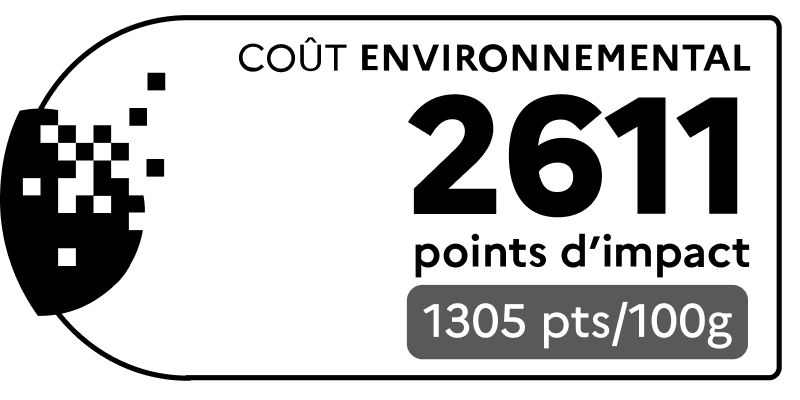
French Eco-Score
Calculates French environmental costs.
How Carbonfact Works
Retrieve and Clean Data
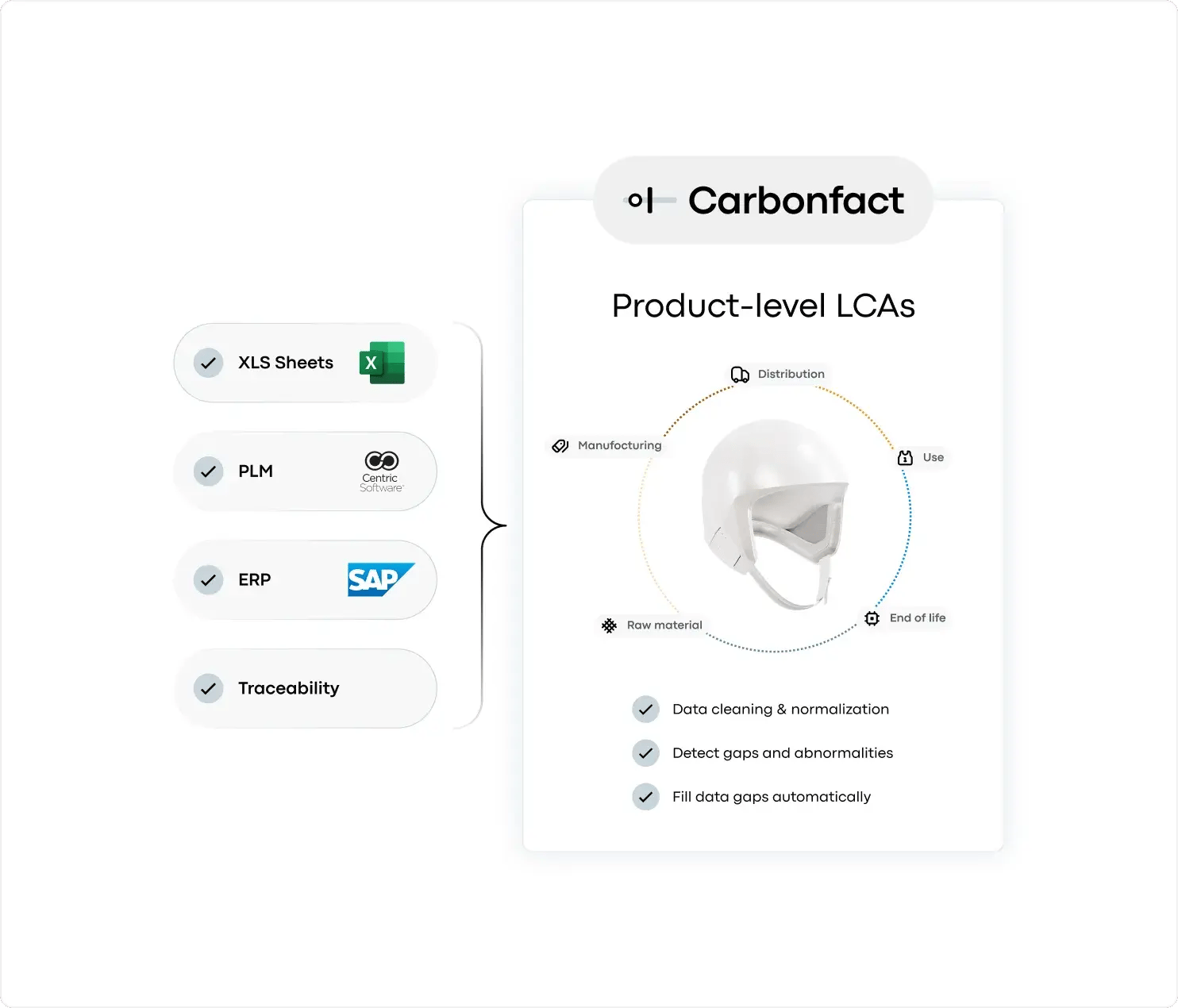
We’ll ingest all your existing product and supply chain data. Whether it lives in a PLM, ERP, Excel Sheet or a combination thereof, we’ll consolidate and clean it. We’ll do all the heavy lifting too – we can build a custom connector that integrates with your existing systems, automating future data import and creating a live connection to Carbonfact.
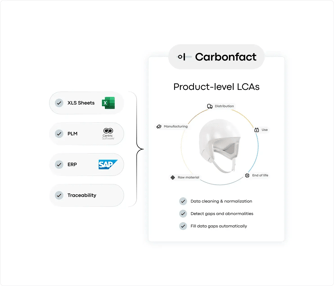
Enrich and Fill Data Gaps
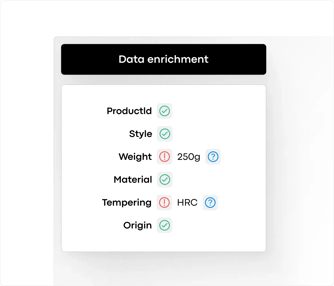
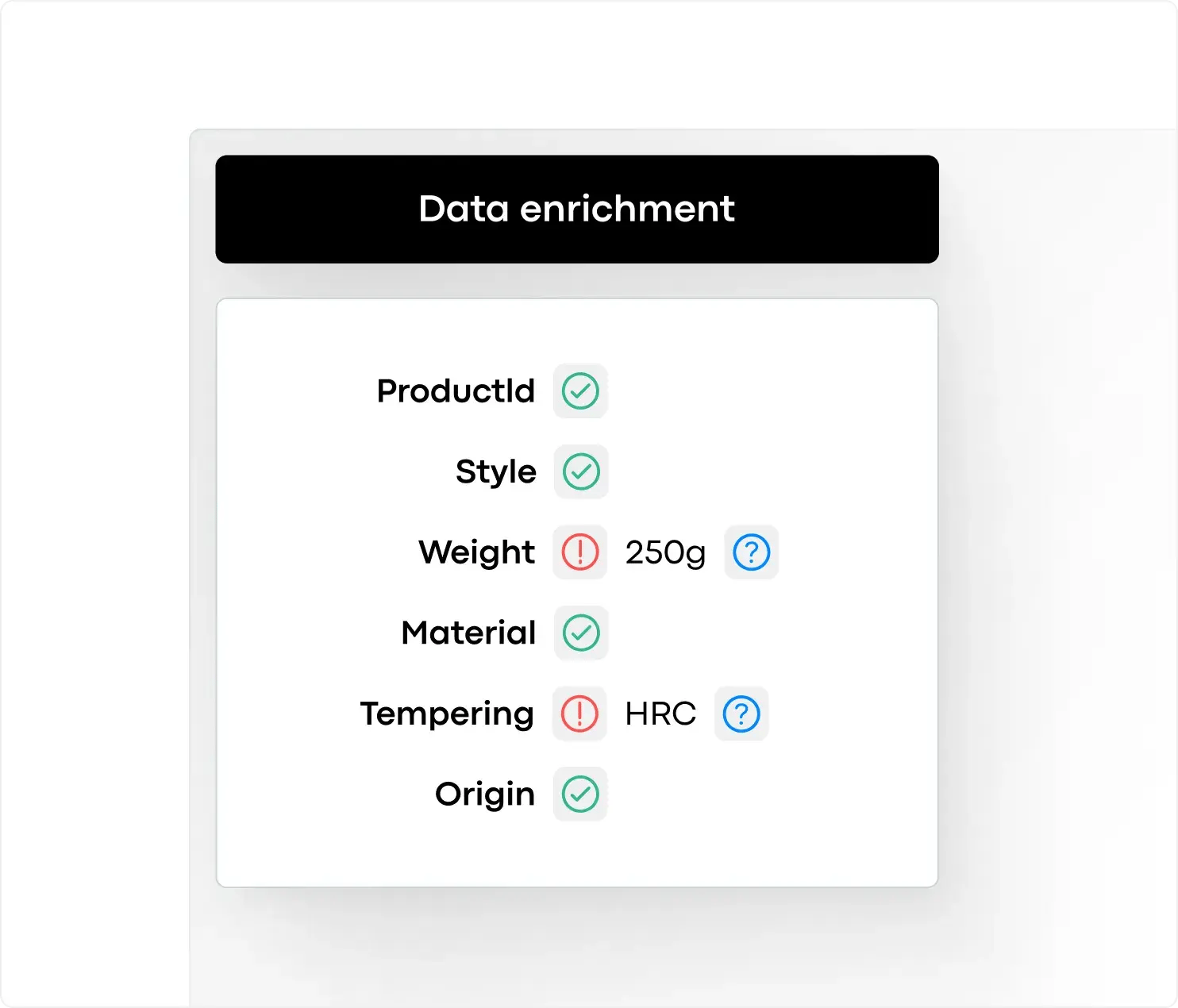
Incomplete data? Not a problem – we’ll find and fill any data gaps. Our smart data engine - trained on extensive primary datasets - automatically fills in missing details such as component weights, dtex, and process-level steps.
First Life Cycle Assessments
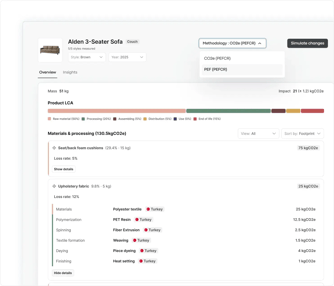
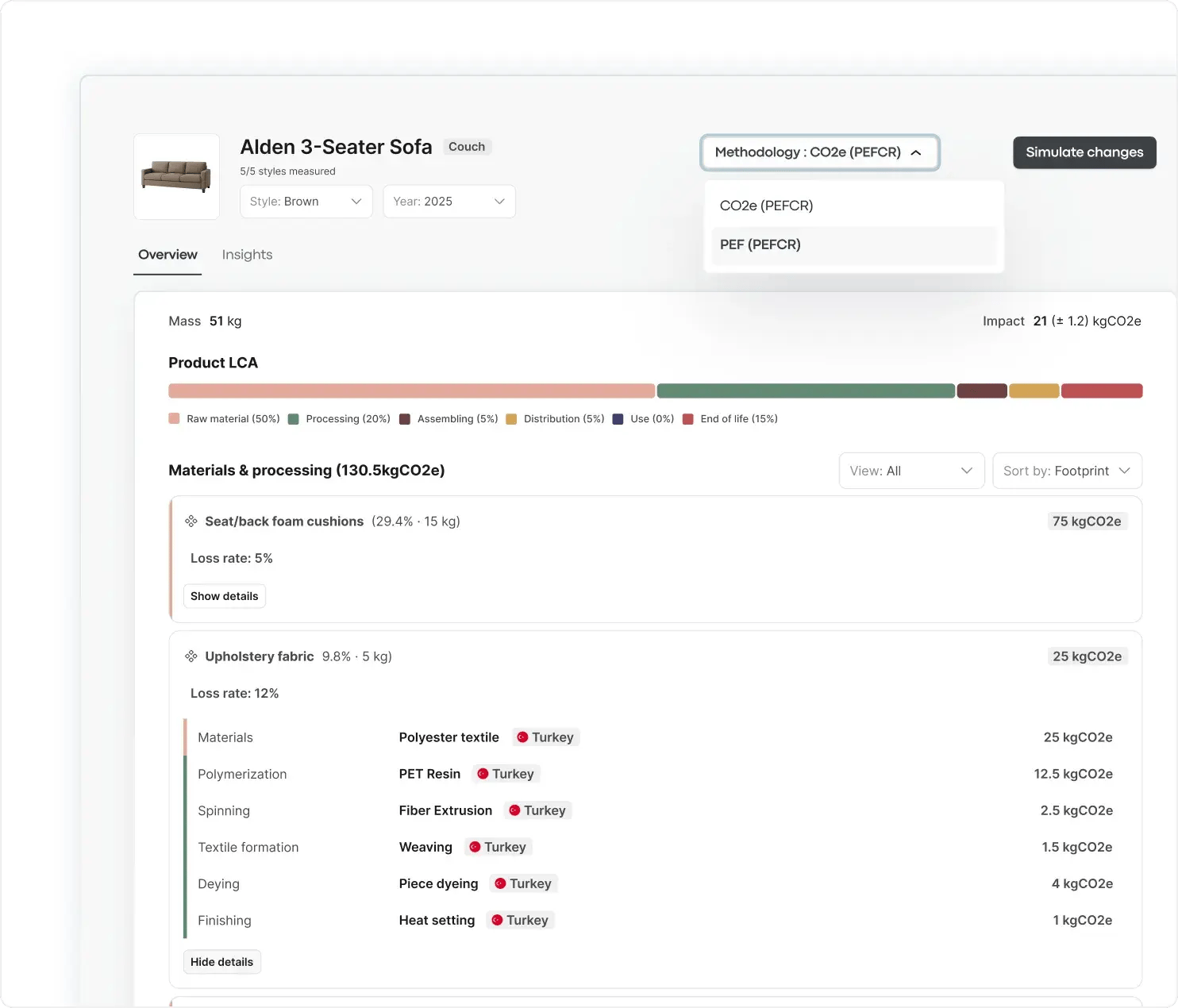
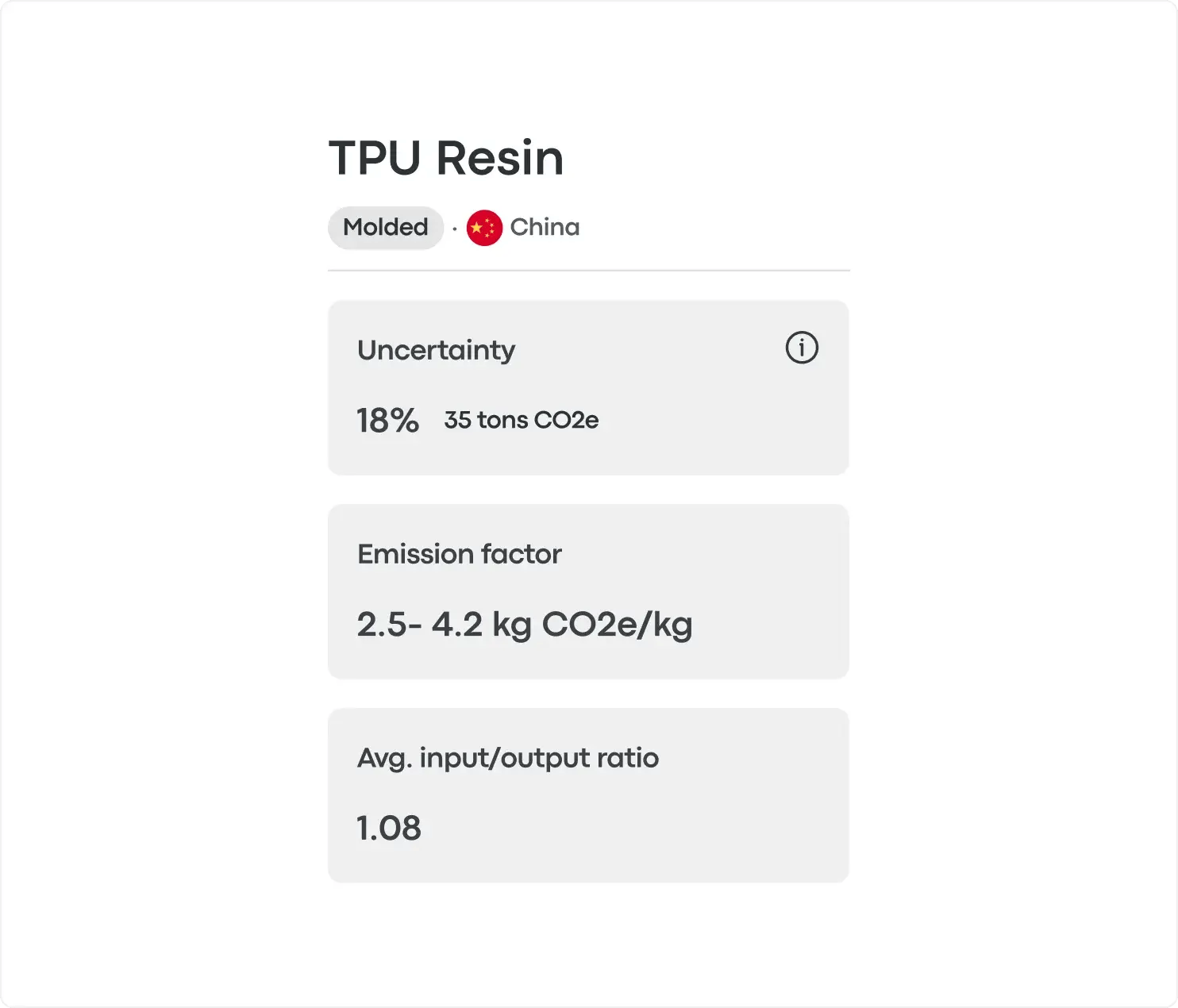
Once your data is processed, our LCA engine automatically calculates the footprints for each of your products on an SKU level. Directly view the product footprint or break it down by any of the 16 PEFCR indicators.
Improve Data Quality
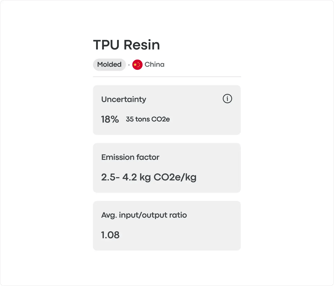
Carbonfact helps you identify emission hotspots and smartly prioritize your supplier data collection. By providing you with a concrete list of data points to gather from your suppliers, we save your team weeks of time and effort.
Publish DPPs
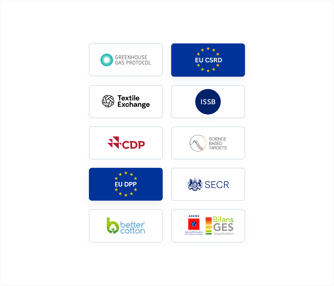
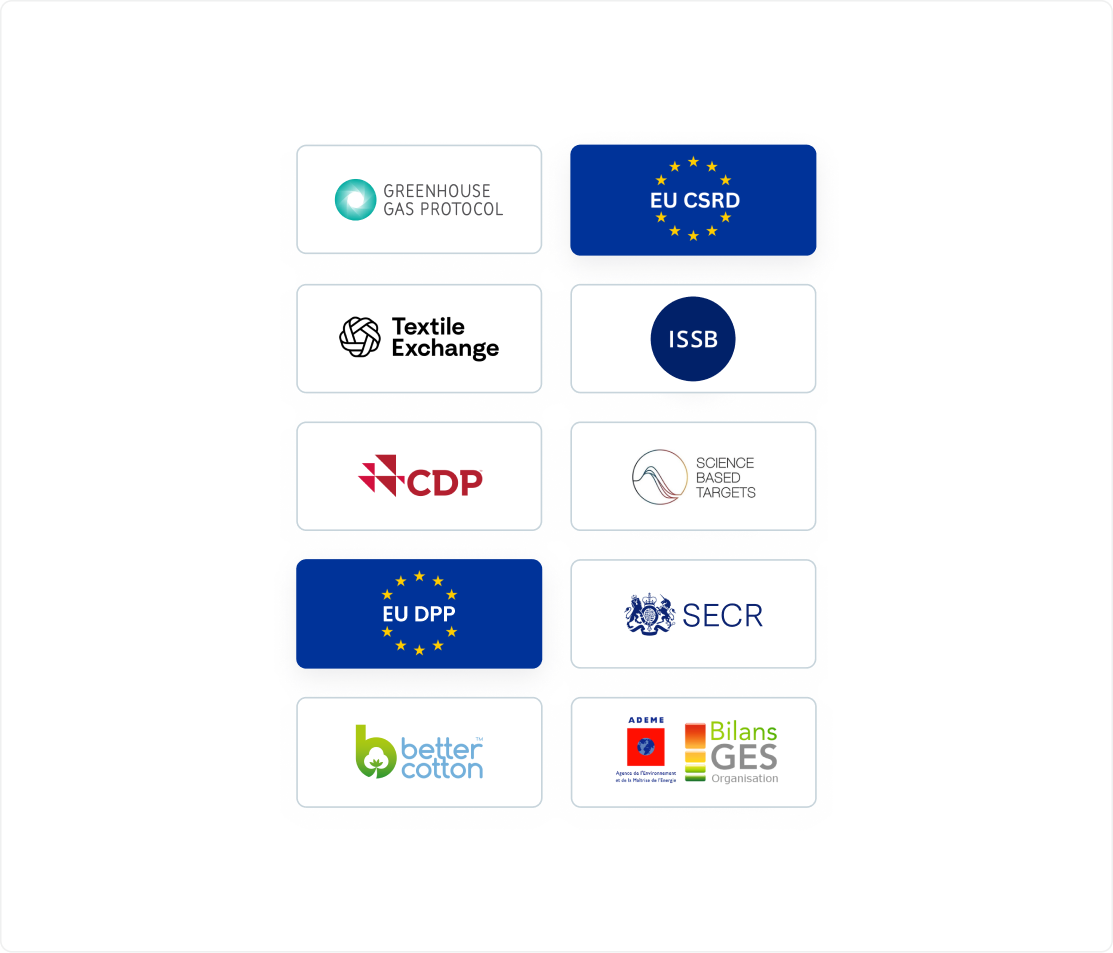
Publish your Digital Product Passports with a few clicks, directly embed them into your website, or create QR codes and share them directly with your label providers. With Carbonfact, you measure once and can report everywhere. Easily create dashboards and reports for other regulations and reporting frameworks (e.g., CSRS, GHG Protocol, CDP, SBTi).
Set Targets and Decarbonize
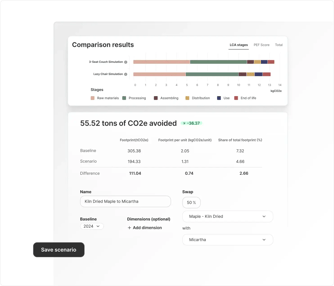
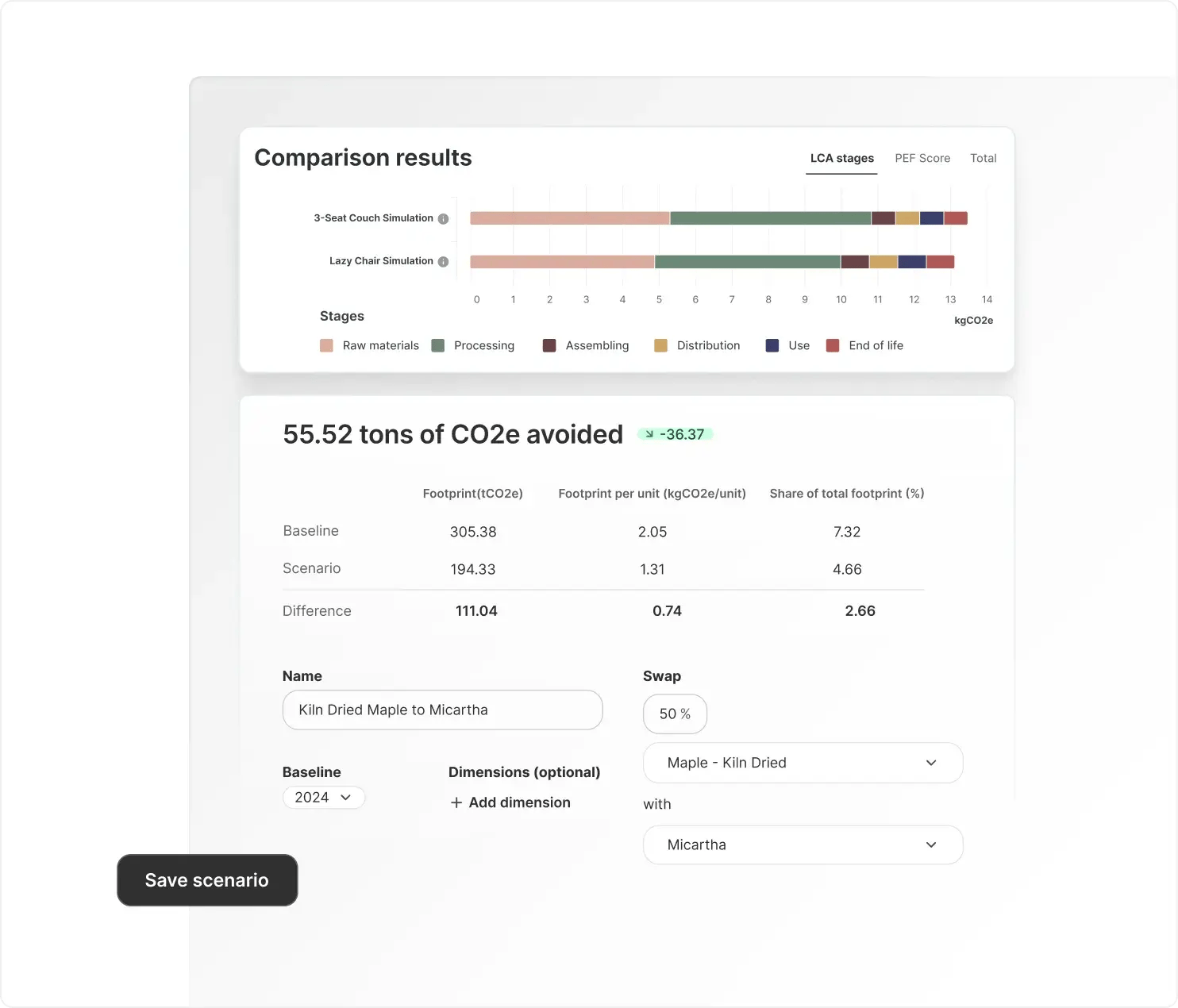
Dive into your data with our analytics dashboards and simulate changes using our Eco Design solution. Model changes across components, materials, process steps, and transport at the product and catalog levels.
Plans and Pricing
Get Started with DPP
Digital Product Passport is part of our Reporting Add-on. Select only the reports you need now, and add on more at a later stage.


Digital Product Passport (DPP)
FLAG emissions breakdown
CSRD ESRS E1 report
CDP reporting
Textile Exchange Material Benchmark report
Better Cotton Initiative (BCI) report
Custom dimensions across all scopes
Automated exports to internal systems

A Platform to Evolve With
From carbon accounting to compliance to decarbonization — all in one place
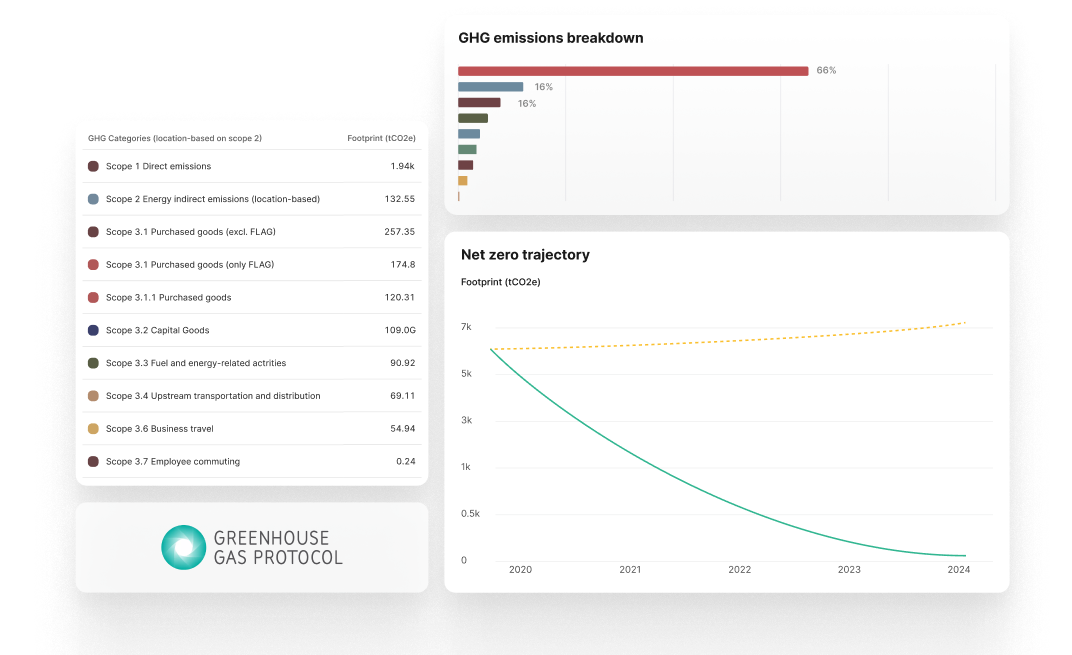
Carbon Accounting
Switch from consultants to fully transparent, fashion-specific carbon accounting.
Decarbonization
Model product and company-wide reduction scenarios using your real data.
Reporting
Simplify compliance with automated, audit-ready reports.
Product LCAs
LCAs across your full catalogue – powered by primary data.
Data Management
Connect your systems – we’ll clean, map, and enrich your data.
Learn More About Digital Product Passport
Regulations deep-dive
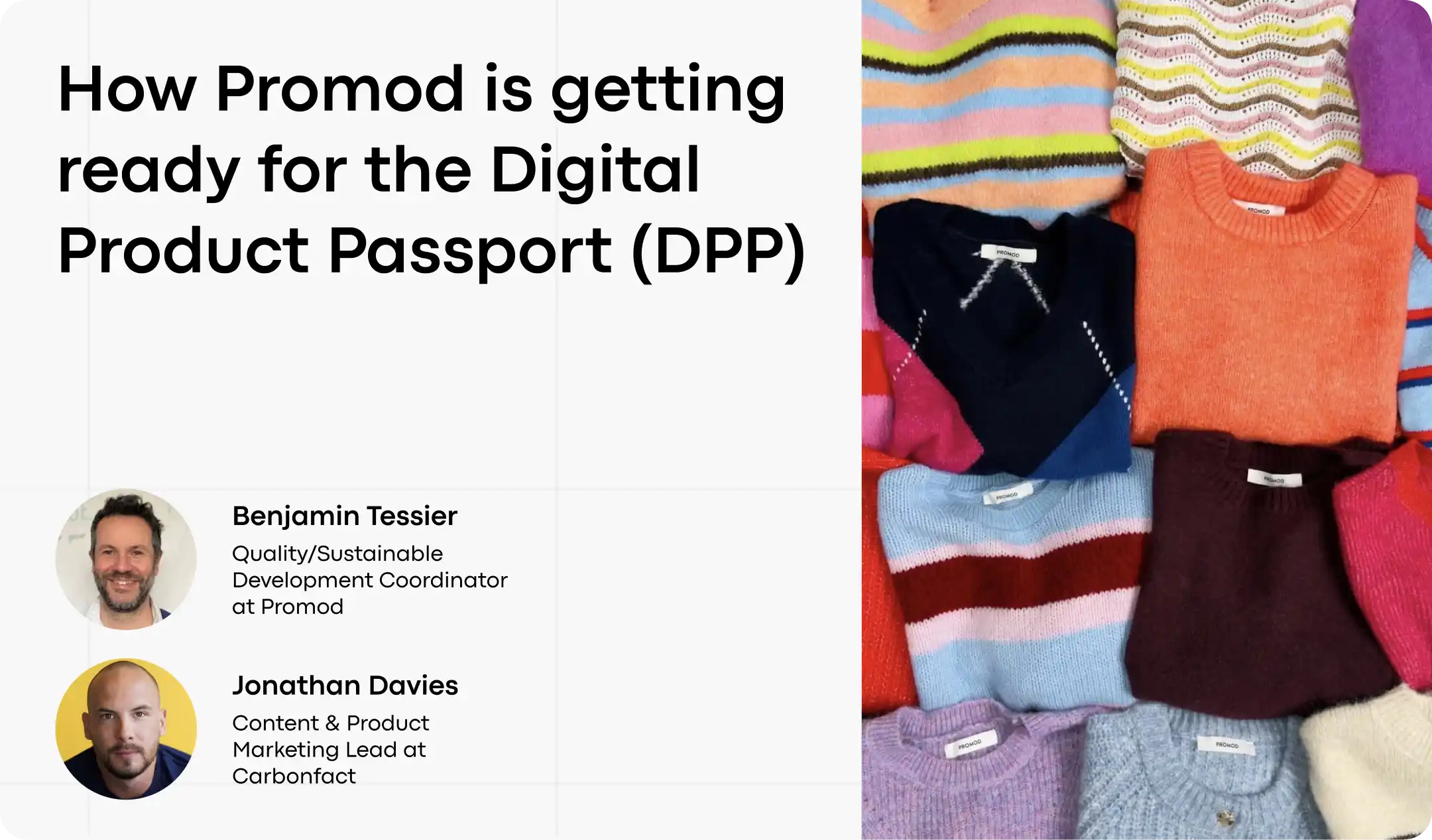
How Promod approaches DPP
Learn from Carbonfact customer Promod how they are planning to implement DPP as one of the first.

.webp)
Deep dive article
Textile DPP simply explained
Everything you need to know about the Digital Product Passport for Textiles.
Downloadable PDF
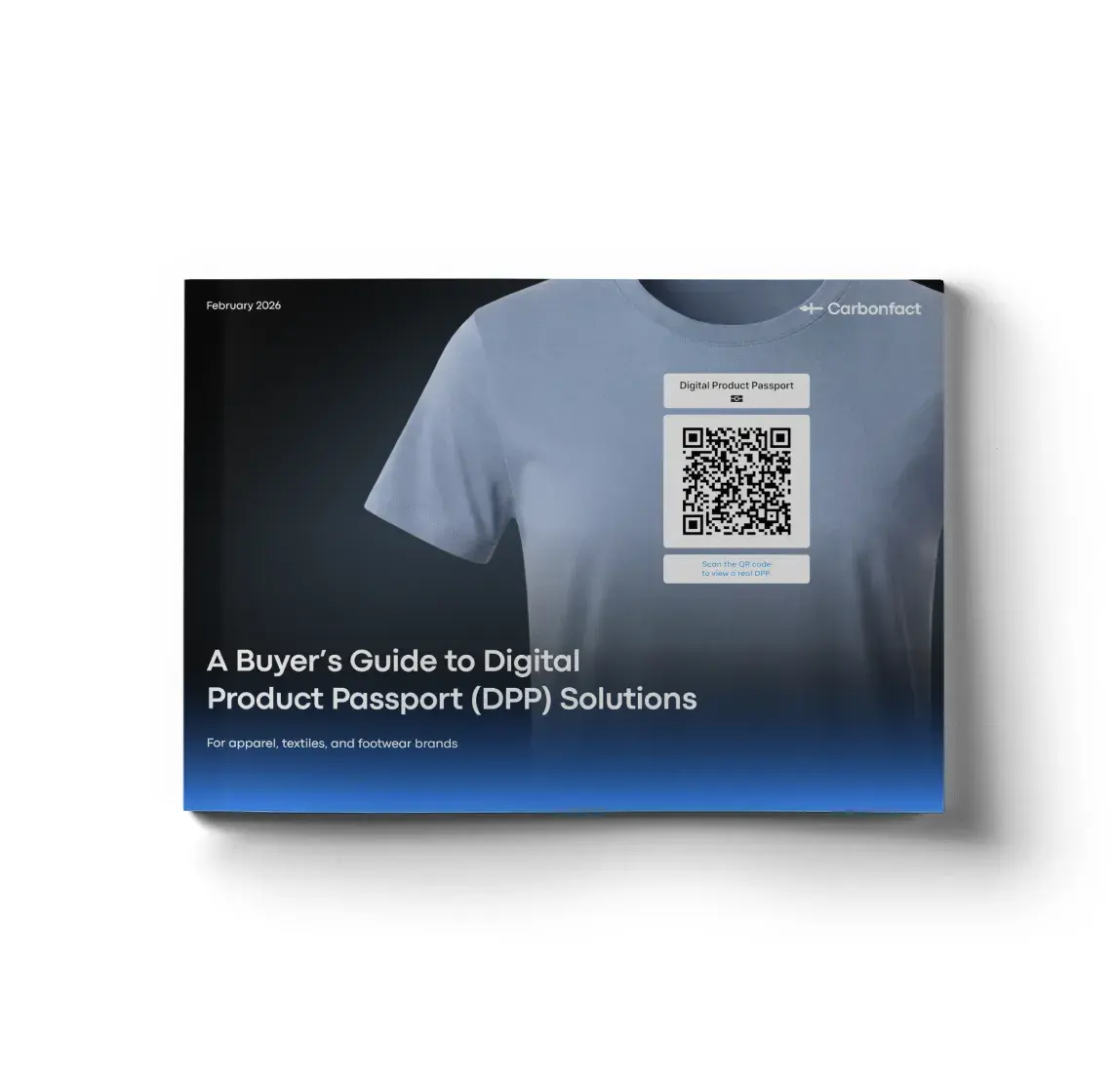
DPP buyers guide
A concrete guide taking a look at different DPP approaches and when which is best.
A Platform to Evolve With
From carbon accounting to compliance to decarbonization — all in one place
Carbon Accounting
Switch from consultants to fully transparent, fashion-specific carbon accounting.
Decarbonization
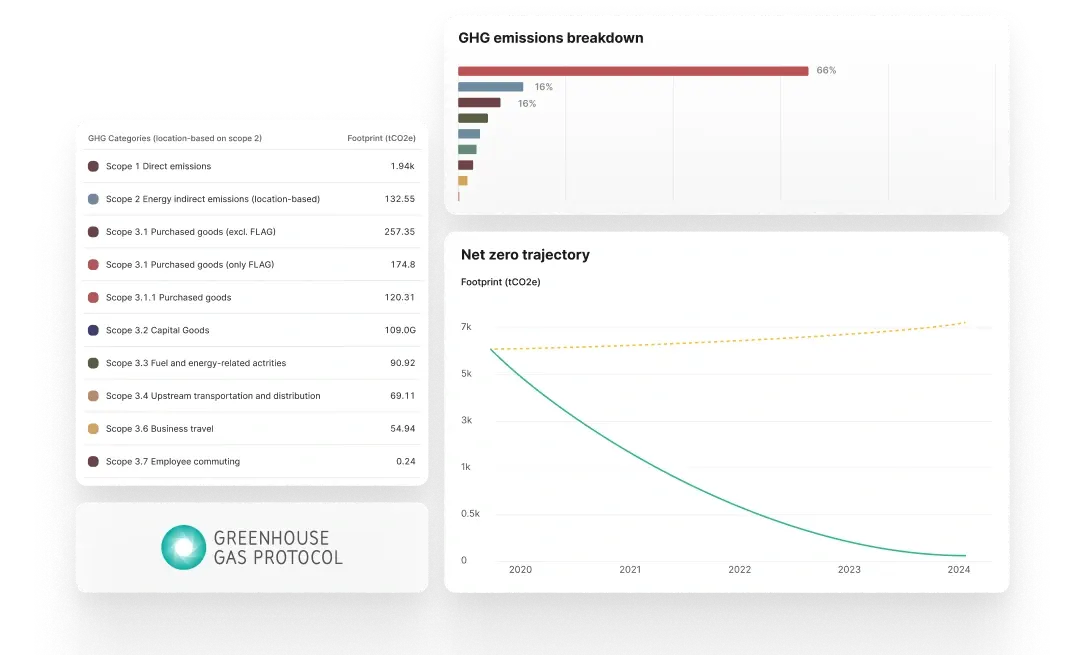
Model product and company-wide reduction scenarios using your real data.
Reporting
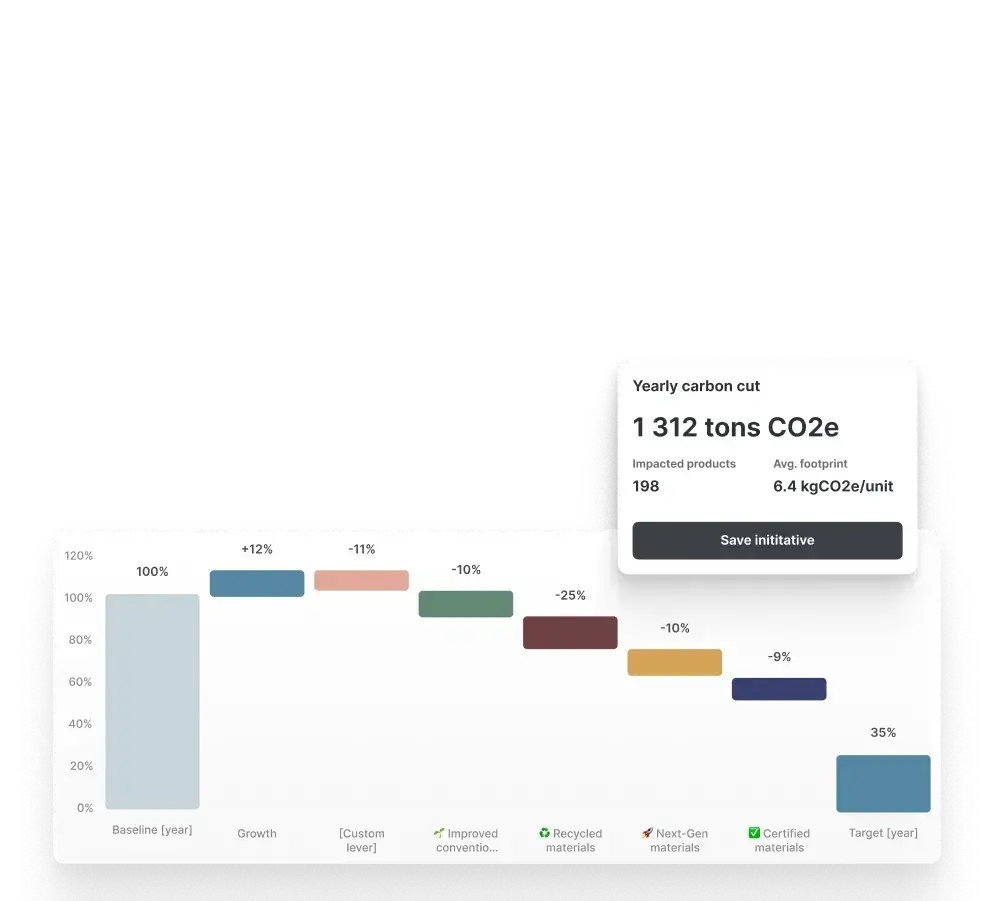
Simplify compliance with automated, audit-ready reports.
![Link [card-5]](https://26616759.fs1.hubspotusercontent-eu1.net/hubfs/26616759/carbon_fact_2025/Images/Link%20%5Bcard-5%5D.webp)
Product LCAs
LCAs across your full catalogue – powered by primary data.
![Link [card-3]-Jul-28-2025-12-29-37-8956-PM (1)](https://26616759.fs1.hubspotusercontent-eu1.net/hubfs/26616759/Link%20%5Bcard-3%5D-Jul-28-2025-12-29-37-8956-PM%20(1).webp)
Data Management
Connect your systems – we’ll clean, map, and enrich your data.
![Link [home-ai-inner] (1)](https://26616759.fs1.hubspotusercontent-eu1.net/hubfs/26616759/Link%20%5Bhome-ai-inner%5D%20(1).webp)
