

Environmental intelligence platform - built for apparel and footwear brands, and their suppliers.


-1.jpg?width=743&height=432&name=Imagery%20template%20(2)-1.jpg)
Eco-design is quickly becoming one of the most important levers for reducing environmental impact in the fashion industry. As regulations such as the Ecodesign for Sustainable Products Regulation (ESPR) and initiatives like the Digital Product Passport (DPP) gain momentum, brands are under increasing pressure to consider sustainability earlier in the product development process.
For design, sourcing, and sustainability teams, this raises a practical question:
What is the best eco-design software for fashion brands?
The answer depends largely on how brands currently evaluate sustainability during product development. Some rely on internal spreadsheets, others use supply chain traceability tools, while a growing number are adopting Life Cycle Assessment (LCA)-based platforms.
This article breaks the market into four main approaches to eco-design software to help fashion brands understand which option best fits their needs.
Eco-design software helps fashion brands evaluate the environmental impact of materials and product choices during the design and sourcing phase.
Today, most brands rely on one of four approaches: internal spreadsheets, traceability tools, LCA-based eco-design platforms, or PLM-embedded sustainability modules.
Each approach reflects a different level of maturity. Spreadsheet models allow quick internal scoring but often lack scientific rigor. Traceability tools provide supply chain visibility but limited environmental impact insights. PLM-embedded tools integrate sustainability into product development workflows but often rely on simplified impact metrics.
LCA-based eco-design platforms calculate product-level environmental footprints based on scientific methodologies, enabling brands to compare design scenarios and make informed sourcing decisions.
For brands preparing for regulatory scrutiny and product-level transparency, the quality of the environmental data behind eco-design decisions is becoming increasingly important.

Eco-design software helps brands answer questions such as:
Which material option has the lowest environmental footprint?
How does switching suppliers affect impact?
What happens if we change fabric weight or composition?
Which products should we prioritize for reduction efforts?
In practice, this requires software that can connect design choices with environmental impact data.
Typical inputs include:
Material composition
Fabric weight and processing
Manufacturing stages
Environmental impact factors
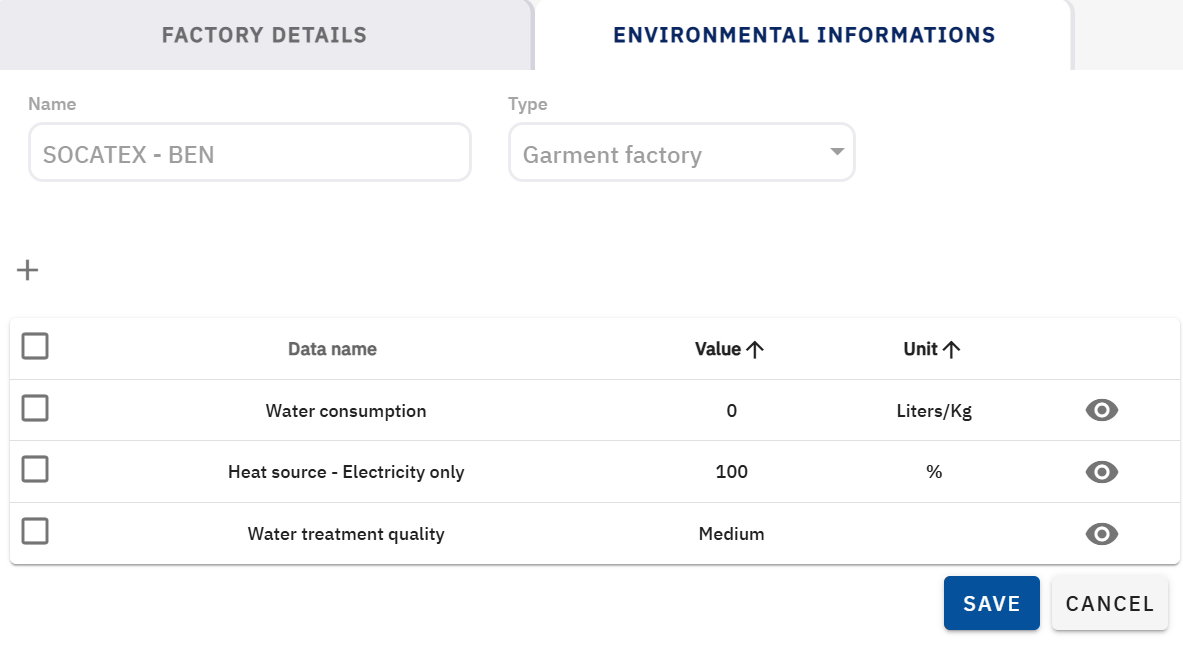
Factory energy mix
This allows design and sourcing teams to test scenarios before production begins, when the majority of a product’s environmental impact is still being determined.
Eco-design tools generally fall into four categories depending on how they generate and use environmental data.
Primary focus: Internal scoring and material comparison
Many brands begin their eco-design journey using internally built spreadsheets. Sustainability teams often develop scoring models to help designers and sourcers compare materials or suppliers.
For example, teams may assign scores to materials based on criteria such as recycled content, certifications, or supplier performance.
While spreadsheets are useful for early experimentation, they rarely provide the scientific rigor or scalability needed for large collections or regulatory reporting.
Example: Promod’s internal tool
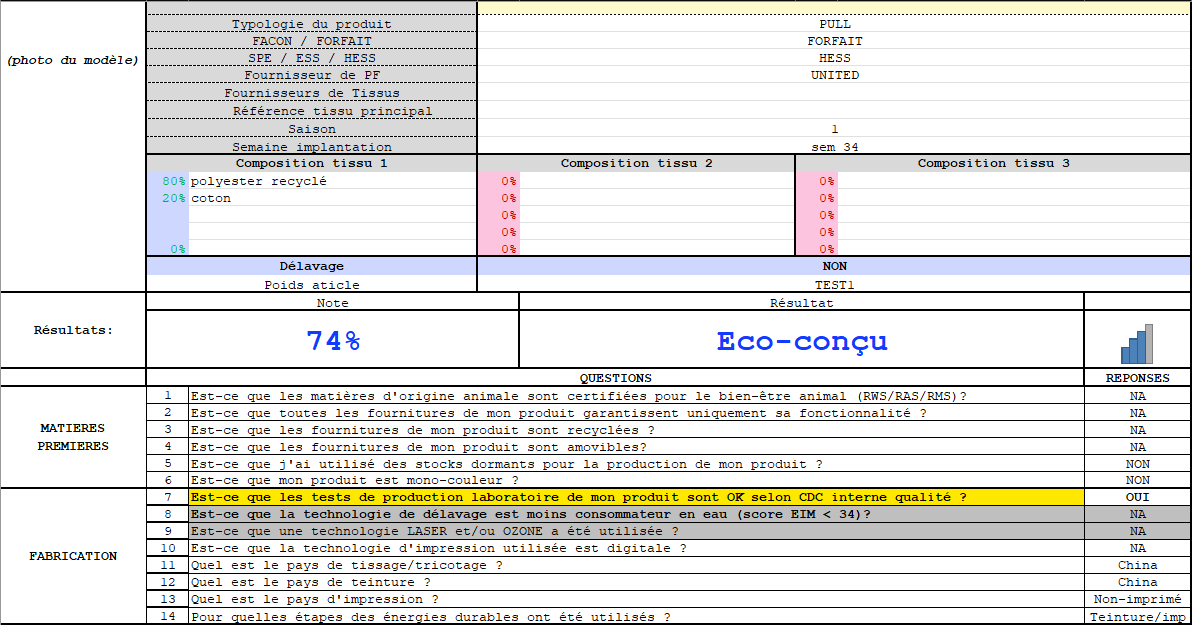
Source: Carbonfact Webinar
Primary focus: Supply chain visibility
Traceability platforms help brands understand where materials come from and how they move through the supply chain. Some brands use these tools to inform eco-design decisions by comparing suppliers or materials.
Traceability tools can support eco-design decisions, but they are typically not built to calculate environmental impact at the product level.
Example: Fairly Made
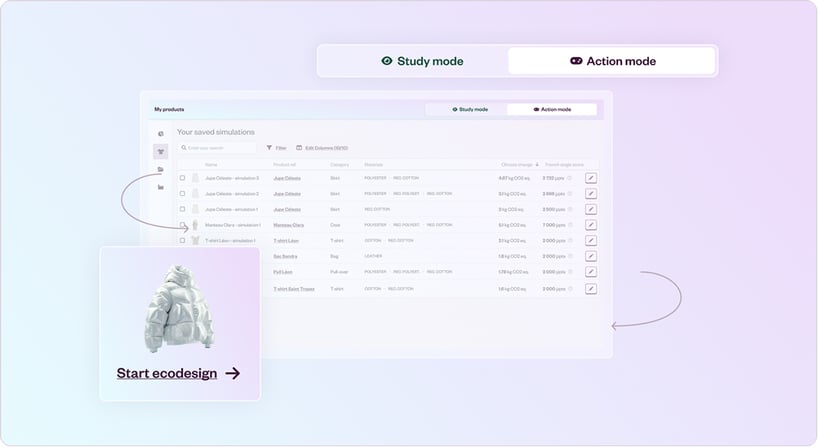
Source: Fairly Made
Primary focus: Product-level environmental footprinting
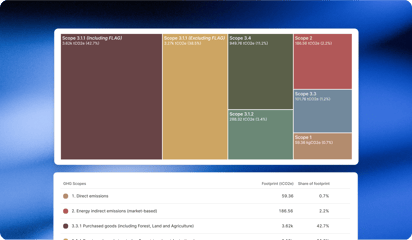
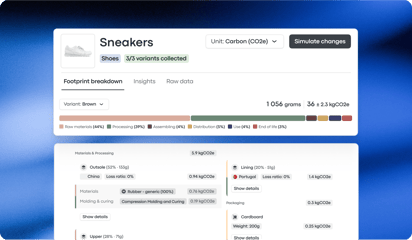
LCA-based eco-design platforms calculate the environmental footprint of products using Life Cycle Assessment methodologies.
This allows design teams to simulate how different material choices, manufacturing processes, or sourcing options affect environmental impact.
For brands serious about reducing impact, LCA-based platforms allow eco-design to move from qualitative judgments to measurable decisions.
Example: Carbonfact
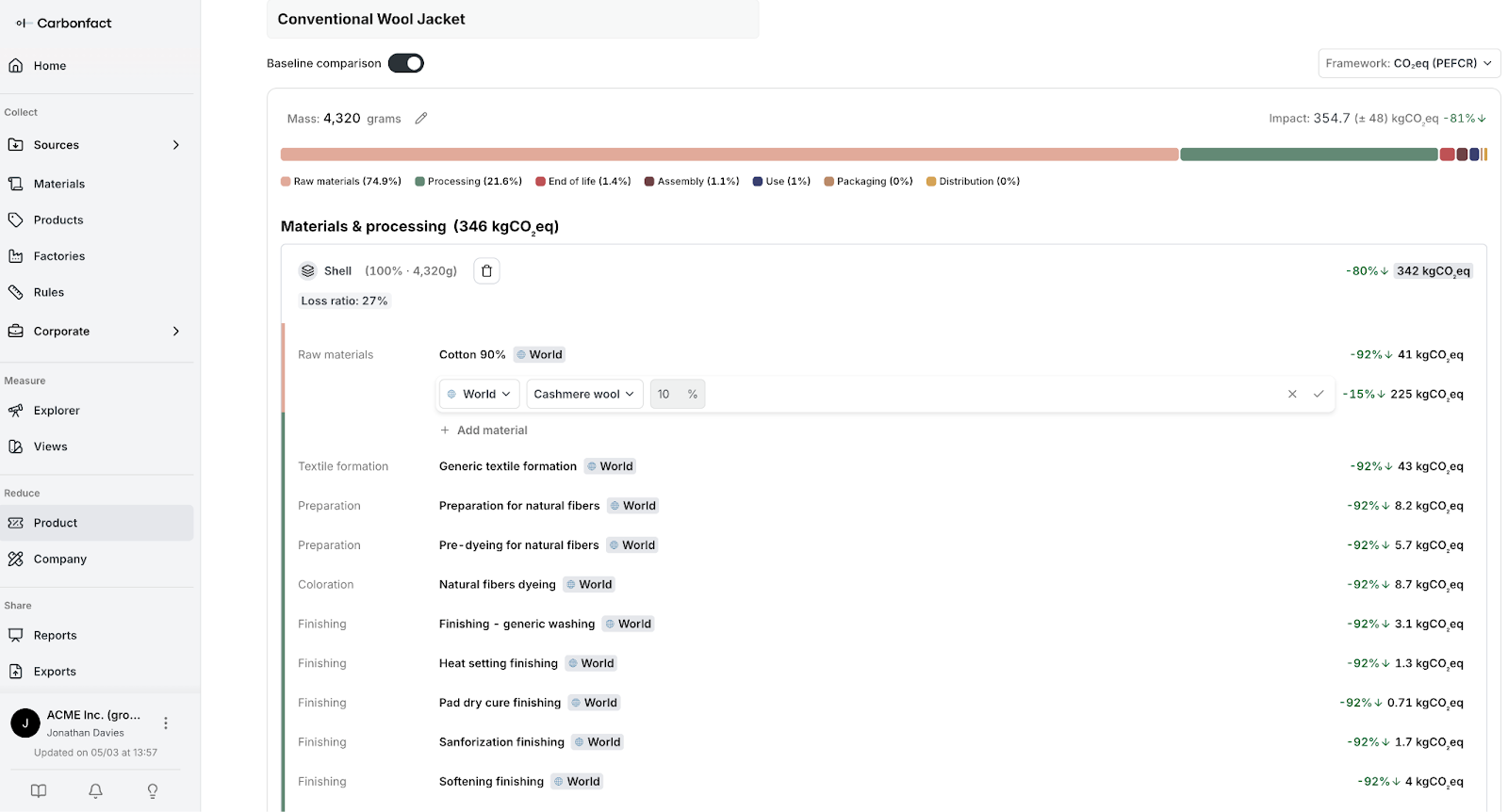
Source: Carbonfact platform
Primary focus: Integrating sustainability into product development workflows
Some Product Lifecycle Management (PLM) platforms now include sustainability modules that allow designers to track environmental attributes within the design process.
These tools work best for brands that want to embed sustainability considerations directly into the design workflow.
Example: Makersite
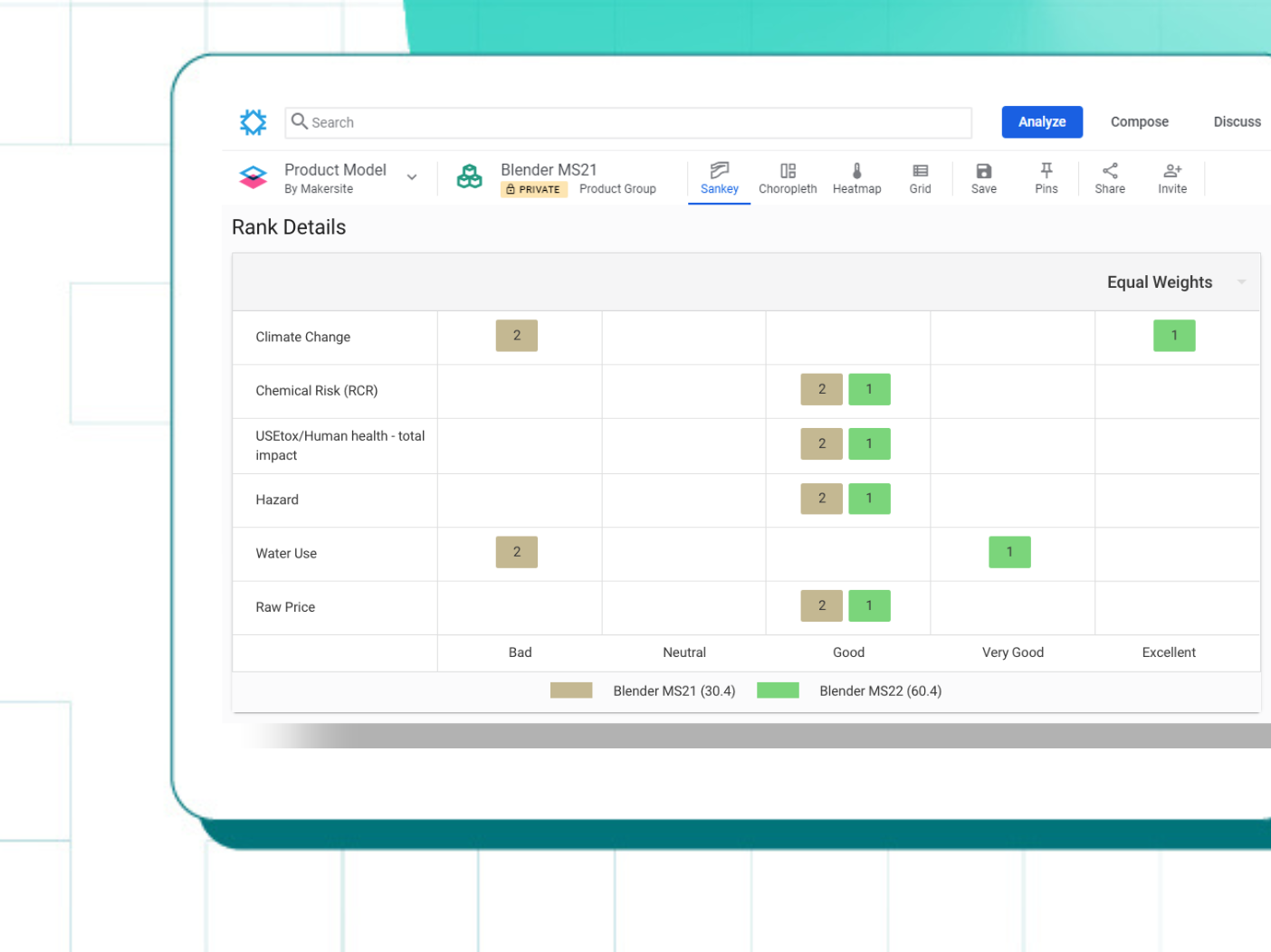
Source: Makersite website
There is no single best eco-design software for every brand.
What matters most is whether the tool helps teams make better design decisions early in the product development process.

Most environmental impact is determined during the design phase. Once materials and manufacturing processes are selected, opportunities for reduction become limited.
LCA-based eco-design platforms allow brands to test different scenarios before production begins, helping teams understand the environmental consequences of design choices.
The same product footprint data can then support:
This allows eco-design to move beyond a design guideline and become a data-driven decision framework.
When evaluating eco-design software, the key question is not simply which tool looks easiest to use, but:
How reliable is the environmental data behind the design decisions?
Some solutions help visualize sustainability, while others calculate it.
As regulatory expectations increase and product-level transparency becomes standard, the ability to base eco-design decisions on robust environmental data will become increasingly important.



Environmental intelligence platform - built for apparel and footwear brands, and their suppliers.