
Environmental intelligence platform - built for apparel and footwear brands, and their suppliers.


This blog post is part of our monthly platform update series – a snapshot of how Carbonfact's platform evolves over time. Features and visuals may have changed since publication. Curious what the platform looks like today? Reach out to our team.
Company Modeling is Carbonfact’s tool for planning your decarbonization strategy – mapping out the impact of material switches, supplier changes, and volume shifts before you commit to them. Over the past weeks, we’ve built three improvements that make the tool more accurate, more realistic about business growth, and we’ve improved the way initiatives are tracked.
Here’s what’s new:
Accurate initiative results: precise modeling even when initiatives share scope
Growth-adjusted scenarios: model your footprint at target year, accounting for business growth
Initiative progress tracking: see how each initiative is performing against plan, in real time
When you run multiple initiatives across your range, some products will fall under more than one – if one initiative targets switching to organic cotton across your women's range, and another does the same across your knitwear, women's knitwear styles appear in both.
Company Modeling now calculates initiatives in sequence, each building on the state left by the last, so their combined impact adds up correctly. Your roadmap total reflects what you'll actually achieve.
Most decarbonization targets are set against a future year, for example 2030 or 2035, when your business will look different. Your product mix will have shifted. Your revenue may have grown. Carbonfact is now able to account for those changes.
You can now set a company-level growth rate and rebalance your product portfolio by category to reflect where you’re headed. This is especially useful when choosing between absolute and intensity-based SBTi targets: you can model how growth affects your footprint trajectory, see whether absolute reductions remain achievable at scale, and pick the target type that’s genuinely credible.
If your brand is growing fast, this changes the math significantly. A 20% reduction target on today’s footprint may not hold if volume doubles. Now you can model that tension before you commit to it.
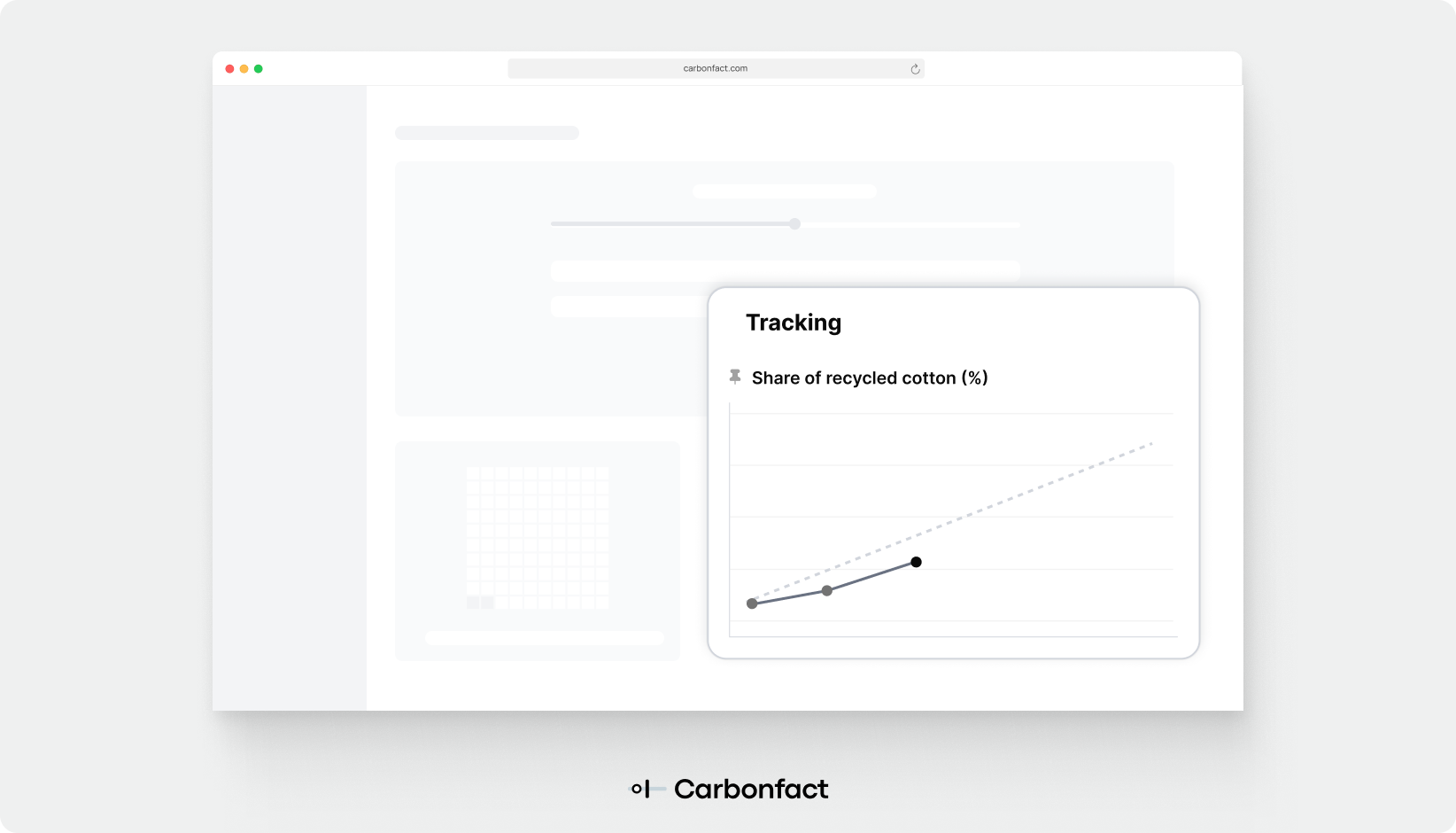
Company Modeling now includes per-initiative progress views. For each initiative, you can see the targeted emissions reduction alongside the actual reduction showing up in your live data. The view links directly to Explorer for year-over-year comparison, so you can drill into exactly which products or categories are driving, or missing, your targets. Pin any initiative dashboard to your homepage to keep it front of mind.
This turns Company Modeling from a “what if” planning tool into a live tracking tool for your climate strategy. The plan and the reality are now in the same place.
Decarbonization strategies succeed when planning and execution stay connected. These updates make that connection tighter: accurate computation means your roadmap reflects how initiatives interact in the real world. Growth modeling means your targets hold up as your business evolves. And progress tracking means you always know where you stand – so you can move quickly if something needs attention.


Environmental intelligence platform - built for apparel and footwear brands, and their suppliers.