








Environmental intelligence platform - built for apparel and footwear brands, and their suppliers.
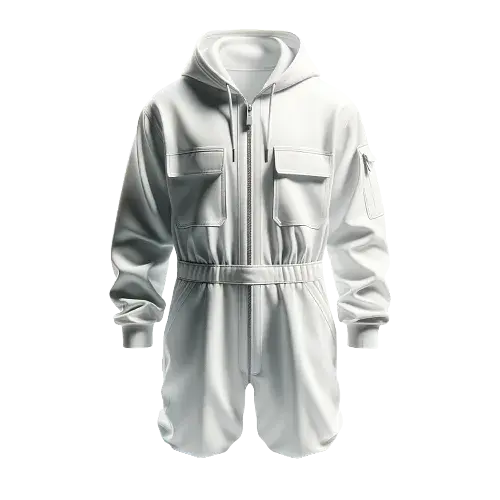
What's the Carbon Footprint of Coveralls?
- Minimum footprint: 12.84 kg CO2e
- Median footprint: 33.74 kg CO2e
- Maximum footprint: 98.6 kg CO2e
Coveralls Carbon Footprint
The DPP for textiles will be mandatory from 2027/2028 for all textile and apparel products sold in the EU.
The Digital Product Passport for an Coveralls ideally should contain information about
The greenhouse gas emissions for coveralls span a considerable range from 12.84 to 98.60 kg CO₂e, indicating potential for optimization and impact reduction through targeted interventions.
The coloration (0.76 kg CO₂e) and finishing (1.01 kg CO₂e) process steps emerge as leading emissions contributors, suggesting opportunities for efficiency improvements in these areas.
With raw materials accounting for 1.03 kg CO₂e, sustainable sourcing and material selection could help reduce the footprint.
While the average mass is 1,126.25 g, the relationship between product mass and emissions is uncertain due to limited component-level data.
Product LCA | Carbon Accounting | Reporting | Eco-Design
CHOSEN by 300+ BRANDS AND SUPPLIERS
"Shoes can consist of up to 1500 components. Before Carbonfact, we asked our developers to weigh every single piece but such a manual approach is not scalable. Carbonfact helped us in deriving rules to overcome data gaps by creating accurate assumptions."
"What's really special about Carbonfact is the way that it can work alongside the VF brands to help identify where there are gaps in our product impact data. But also helping us bridge towards improving that data. So it's much more of a partner to solve the challenges we have."
"The Explorer is, for sure, my favorite feature. I love the ability to look at the breakdown of the carbon footprint per product line, for processes or on a material basis. That's so dynamic that we're able to leverage it in different ways depending on the projects that we're working on or the teams that we're engaging with."
Carbonfact helps us bring together thousands of data points from across many systems to create consistent, brand‑level environmental footprint information. That same data powers Digital Product Passports, making it easy to generate QR codes and share clear, reliable product information at scale.”
© 2026 Kanso, Inc. All rights reserved.
If you click on “Accept all” you agree to the use of these cookies. To find out more about the cookies we use, see our Privacy & Cookie Policy. Or, you can continue without agreeing .